Over onze verlovingsringen
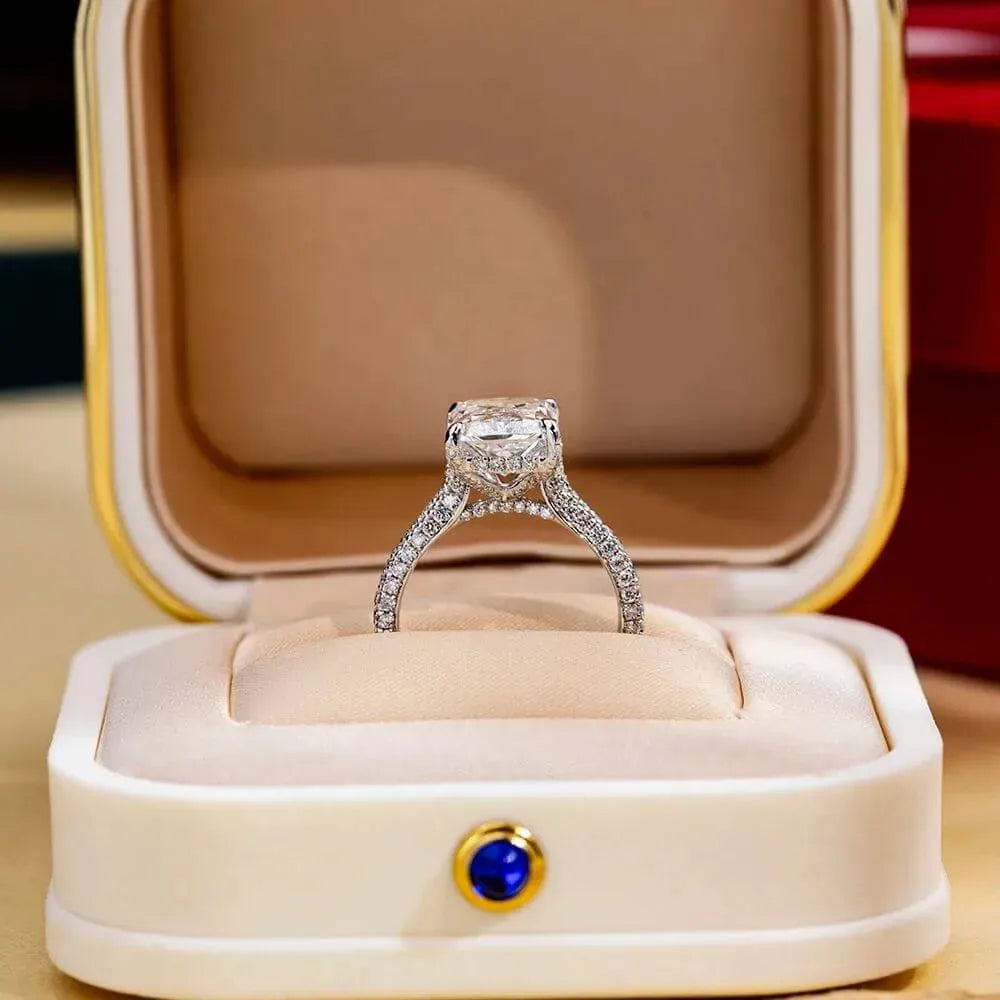
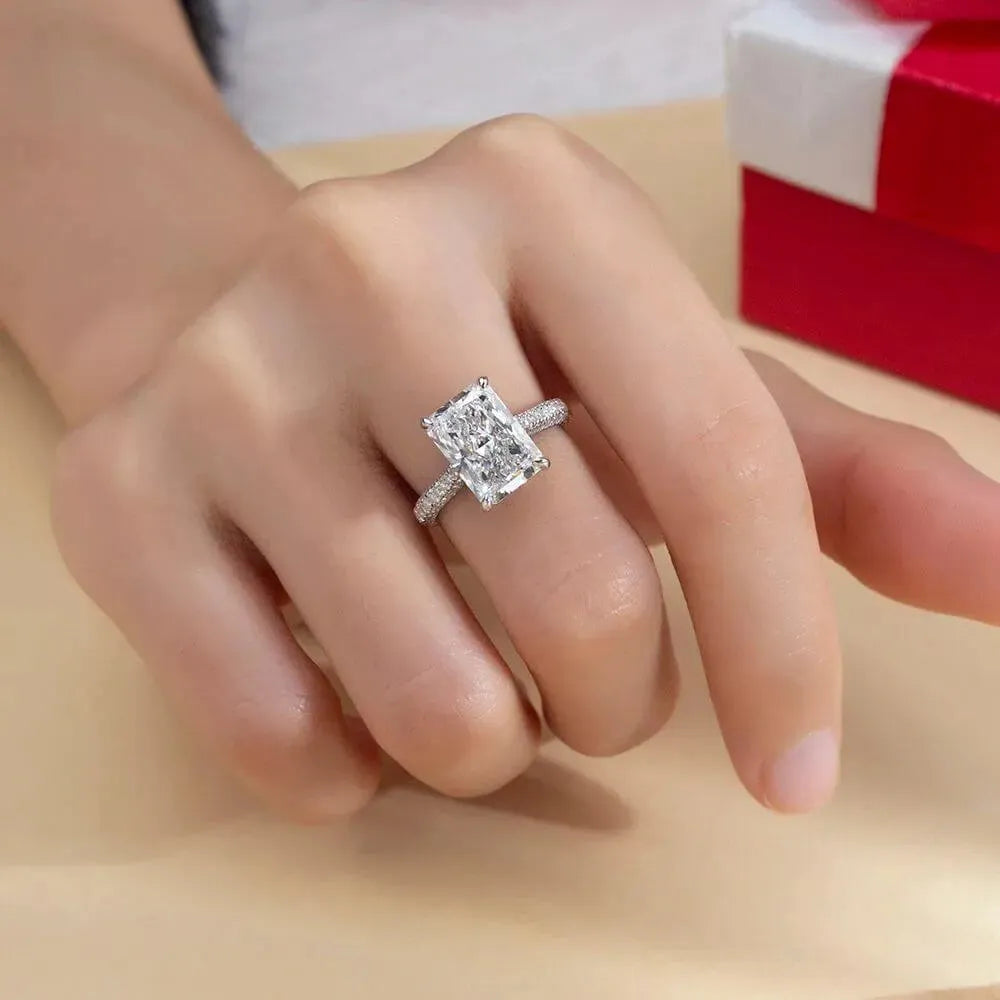
Of je nu droomt van een fonkelende solitaire of een moderne halo-stijl, onze collectie verlovingsringen is ontworpen om liefde in al haar vormen te vieren. Bij Chantal Vaulet is elke ring vervaardigd met lab-gegroeide diamanten of moissanite, duurzame luxe zonder compromissen. Ontdek de slijpvormen, zettingen en materialen die onze ringen net zo uniek maken als jouw liefdesverhaal.
-
4.65 / 5.0
(17) 17 totaal beoordelingen
Normale prijs Van $92.00Verkoopprijs Van $92.00 Normale prijsEenheidsprijs / per -
Normale prijs Van $768.00Verkoopprijs Van $768.00 Normale prijsEenheidsprijs / per
$0.00 -
5.0 / 5.0
(9) 9 totaal beoordelingen
Normale prijs $106.00Verkoopprijs $106.00 Normale prijsEenheidsprijs / per -
Normale prijs Van $106.00Verkoopprijs Van $106.00 Normale prijsEenheidsprijs / per
-
Normale prijs Van $913.00Verkoopprijs Van $913.00 Normale prijsEenheidsprijs / per
$0.00 -
Normale prijs Van $916.00Verkoopprijs Van $916.00 Normale prijsEenheidsprijs / per
$0.00 -
Normale prijs Van $990.00Verkoopprijs Van $990.00 Normale prijsEenheidsprijs / per
$0.00 -
Normale prijs Van $893.00Verkoopprijs Van $893.00 Normale prijsEenheidsprijs / per
$0.00 -
Normale prijs Van $864.00Verkoopprijs Van $864.00 Normale prijsEenheidsprijs / per
$0.00 -
Normale prijs Van $926.00Verkoopprijs Van $926.00 Normale prijsEenheidsprijs / per
$0.00 -
Normale prijs Van $1,023.00Verkoopprijs Van $1,023.00 Normale prijsEenheidsprijs / per
$0.00 -
Normale prijs Van $932.00Verkoopprijs Van $932.00 Normale prijsEenheidsprijs / per
$0.00 -
Normale prijs Van $1,737.00Verkoopprijs Van $1,737.00 Normale prijsEenheidsprijs / per
$0.00 -
Normale prijs Van $752.00Verkoopprijs Van $752.00 Normale prijsEenheidsprijs / per
$0.00 -
Normale prijs Van $575.00Verkoopprijs Van $575.00 Normale prijsEenheidsprijs / per
$0.00 -
Normale prijs Van $604.00Verkoopprijs Van $604.00 Normale prijsEenheidsprijs / per
$0.00 -
Normale prijs Van $2,891.00Verkoopprijs Van $2,891.00 Normale prijsEenheidsprijs / per
$0.00 -
Normale prijs Van $858.00Verkoopprijs Van $858.00 Normale prijsEenheidsprijs / per
$0.00 -
Normale prijs $115.00Verkoopprijs $115.00 Normale prijsEenheidsprijs / per
$0.00 -
Normale prijs $106.00Verkoopprijs $106.00 Normale prijsEenheidsprijs / per
$0.00 -
Normale prijs $115.00Verkoopprijs $115.00 Normale prijsEenheidsprijs / per
$0.00 -
Normale prijs $144.00Verkoopprijs $144.00 Normale prijsEenheidsprijs / per
$0.00 -
Normale prijs Van $121.00Verkoopprijs Van $121.00 Normale prijsEenheidsprijs / per
$0.00 -
Normale prijs Van $121.00Verkoopprijs Van $121.00 Normale prijsEenheidsprijs / per
$0.00 -
Normale prijs Van $92.00Verkoopprijs Van $92.00 Normale prijsEenheidsprijs / per
$0.00 -
Normale prijs $106.00Verkoopprijs $106.00 Normale prijsEenheidsprijs / per
$0.00 -
Normale prijs $131.00Verkoopprijs $131.00 Normale prijsEenheidsprijs / per
$0.00 -
Normale prijs Van $95.00Verkoopprijs Van $95.00 Normale prijsEenheidsprijs / per
$0.00 -
Normale prijs Van $96.00Verkoopprijs Van $96.00 Normale prijsEenheidsprijs / per
-
Normale prijs $96.00Verkoopprijs $96.00 Normale prijsEenheidsprijs / per
-
Normale prijs $95.00Verkoopprijs $95.00 Normale prijsEenheidsprijs / per
-
Normale prijs $95.00Verkoopprijs $95.00 Normale prijsEenheidsprijs / per
-
Normale prijs $95.00Verkoopprijs $95.00 Normale prijsEenheidsprijs / per
-
Normale prijs Van $95.00Verkoopprijs Van $95.00 Normale prijsEenheidsprijs / per
-
Normale prijs $106.00Verkoopprijs $106.00 Normale prijsEenheidsprijs / per
-
Normale prijs $95.00Verkoopprijs $95.00 Normale prijsEenheidsprijs / per
-
Normale prijs Van $106.00Verkoopprijs Van $106.00 Normale prijsEenheidsprijs / per
-
Normale prijs $95.00Verkoopprijs $95.00 Normale prijsEenheidsprijs / per
-
Normale prijs Van $92.00Verkoopprijs Van $92.00 Normale prijsEenheidsprijs / per
-
Normale prijs $135.00Verkoopprijs $135.00 Normale prijsEenheidsprijs / per
-
Normale prijs Van $125.00Verkoopprijs Van $125.00 Normale prijsEenheidsprijs / per
-
Normale prijs Van $125.00Verkoopprijs Van $125.00 Normale prijsEenheidsprijs / per
-
Normale prijs $125.00Verkoopprijs $125.00 Normale prijsEenheidsprijs / per
-
Normale prijs $131.00Verkoopprijs $131.00 Normale prijsEenheidsprijs / per
-
Normale prijs $131.00Verkoopprijs $131.00 Normale prijsEenheidsprijs / per
-
Normale prijs $131.00Verkoopprijs $131.00 Normale prijsEenheidsprijs / per
-
Normale prijs $131.00Verkoopprijs $131.00 Normale prijsEenheidsprijs / per
-
Normale prijs $131.00Verkoopprijs $131.00 Normale prijsEenheidsprijs / per
-
Normale prijs $131.00Verkoopprijs $131.00 Normale prijsEenheidsprijs / per
-
Normale prijs $121.00Verkoopprijs $121.00 Normale prijsEenheidsprijs / per
Engagement Ring FAQs
What are the most popular engagement ring styles?
Quick Answer (60 words):
According to The Knot 2024 Real Weddings Study, the most popular engagement ring styles are solitaire (35%), halo (24%), three-stone (11%), pavé (10%), and vintage-inspired (9%). Solitaires showcase a single diamond in timeless elegance, while halos surround the center stone with smaller diamonds to enhance brilliance and create the illusion of a larger center diamond.
Detailed Answer:
Understanding engagement ring styles helps you choose a design that reflects your personal taste and lifestyle. The Gemological Institute of America (GIA) recognizes several classic styles that have defined engagement jewelry for generations.
The Top Engagement Ring Styles:
1. Solitaire Engagement Rings (35% market share)
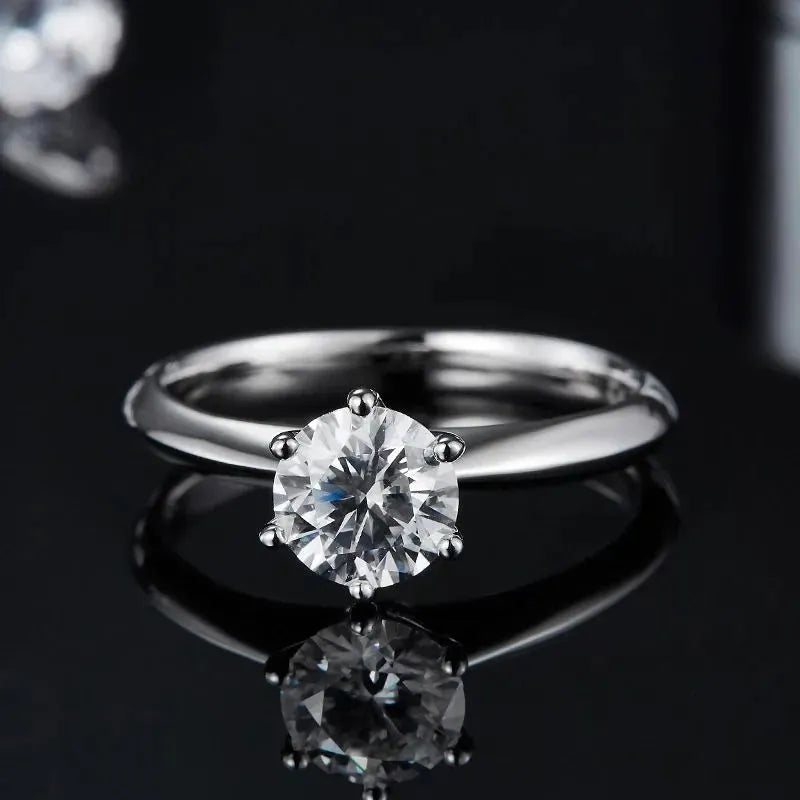
The solitaire is the most timeless and classic engagement ring style, featuring a single center diamond held by four or six prongs. This design maximizes the diamond's visibility and brilliance without distraction from side stones or elaborate metalwork.
Best for: Classic elegance, showcasing diamond quality, traditional preferences
Popular with: Round engagement rings, oval engagement rings
Browse our solitaire collection
2. Halo Engagement Rings (24% market share)
Halo designs feature a center diamond surrounded by a circle of smaller accent diamonds, creating enhanced sparkle and making the center stone appear 30-50% larger. According to The Knot research, halos have maintained strong popularity since the 2010s.
Best for: Maximum brilliance, vintage aesthetics, value-conscious buyers
Popular with: Oval, cushion, and round diamonds
Browse our halo collection
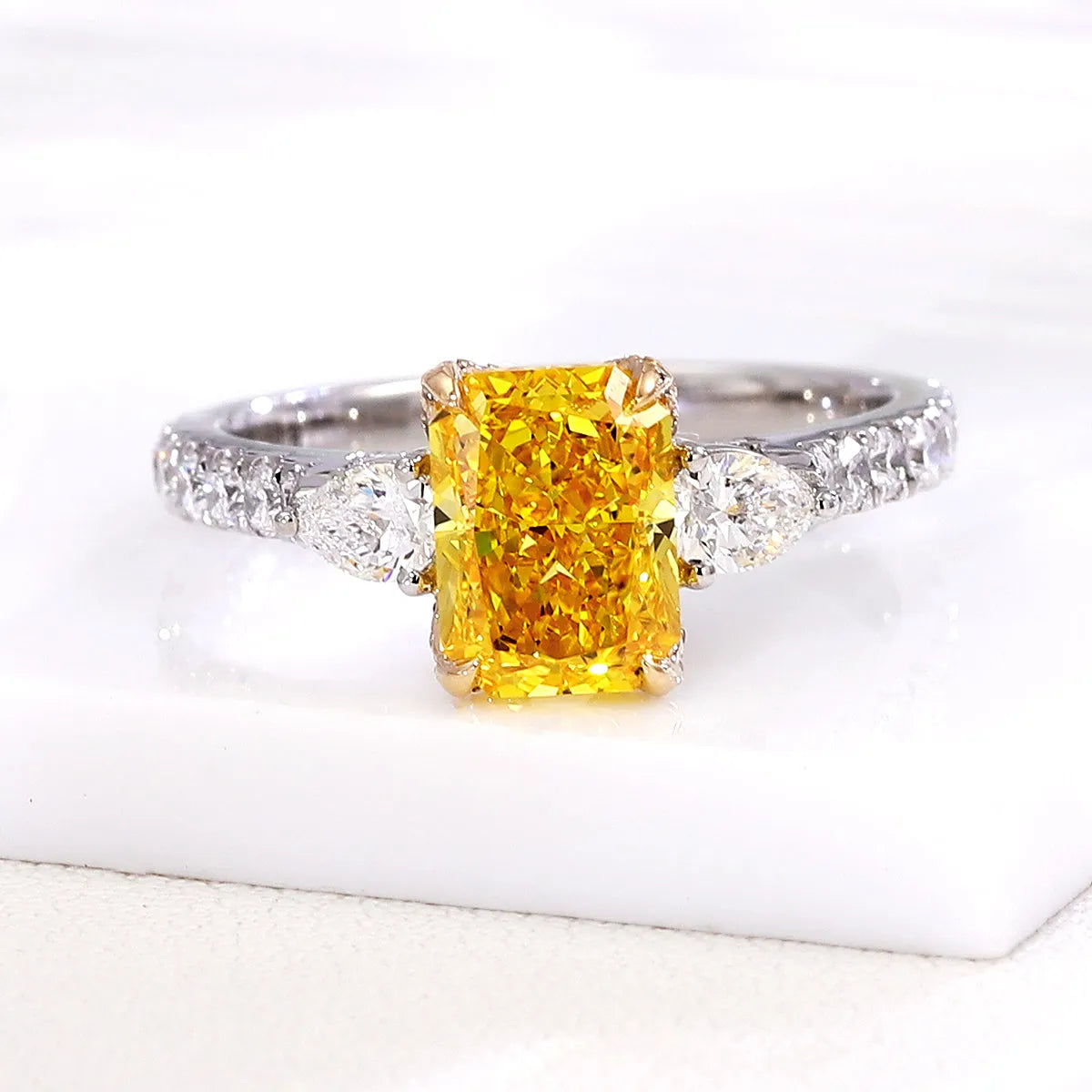
3. Three-Stone Engagement Rings (11% market share)
Three-stone rings feature a center diamond flanked by two side stones, traditionally symbolizing your relationship's past, present, and future. The American Gem Society notes this meaningful design appeals to romantic couples seeking symbolism.
Best for: Symbolic meaning, balanced designs, substantial presence
Popular with: Round, oval, and emerald diamonds
Browse our three-stone collection
4. Pavé Engagement Rings (10% market share)
Pavé settings feature tiny diamonds set closely together along the band, creating a "paved" surface of continuous sparkle. These designs add brilliance without overwhelming the center stone.
Best for: Feminine aesthetics, maximum sparkle, delicate appearances
Works with: Any center diamond shape
Browse our pavé collection
5. Vintage-Inspired Engagement Rings (9% market share)
Vintage or antique-inspired rings incorporate design elements from past eras—Victorian, Edwardian, or Art Deco. These feature intricate metalwork, milgrain detailing, and hand-engraved patterns.
Best for: Unique character, romantic aesthetics, history enthusiasts
Popular with: Old mine cut, cushion, and asscher diamonds
Browse our vintage collection
Current Trends:
According to The Knot 2025 Real Weddings Study:
- Oval engagement rings have surged 300% in popularity since 2015, now representing 15% of all engagement rings
- Simple engagement rings with clean lines appeal to 12% of modern couples
- Hidden halo engagement rings (6,600 searches/month) feature a concealed halo visible only from the side
- Bezel engagement rings (8,100 searches/month) are growing rapidly for active lifestyles
How to Choose Your Style:
Consider these factors when selecting your engagement ring style:
- Lifestyle: Active lifestyles → bezel or low-profile solitaire
- Personal Style: Classic → solitaire; Glamorous → halo; Unique → vintage
- Budget: Halos and pavé add cost but make center diamonds appear larger
- Wedding Band Pairing: Consider how your style will stack with a wedding band
Sources:
What diamond shapes are available for engagement rings?
Quick Answer (60 words):
According to the Gemological Institute of America, the ten most popular diamond shapes for engagement rings are round brilliant (60%), oval (15%), cushion (7%), princess (6%), emerald (5%), pear (2%), marquise (2%), radiant (1.5%), asscher (1%), and heart (<1%). Each shape offers distinct characteristics affecting brilliance, size appearance, and price, with round diamonds commanding a 25-35% premium over fancy shapes.
Detailed Answer:
Diamond shape, the geometric outline of your diamond, significantly influences your engagement ring's overall aesthetic, apparent size, and budget. The Gemological Institute of America (GIA) provides comprehensive guidance on selecting the perfect diamond shape for your style and preferences.
Popular Diamond Shapes:
1. Round Brilliant (60% of engagement rings)
The round brilliant cut features 58 precisely positioned facets engineered to maximize light return. Developed by Marcel Tolkowsky in 1919, this cut remains the standard for brilliance.
Characteristics: Maximum sparkle, timeless appeal, highest resale value
Price: Premium (25-35% more than fancy shapes)
Best for: Traditional preferences, maximum brilliance
View round engagement rings
2. Oval Engagement Rings (15% of engagement rings - fastest growing!)
Oval diamonds feature an elongated brilliant cut with 56-58 facets, offering similar brilliance to rounds while creating a finger-lengthening effect. According to The Knot, oval engagement rings have increased 300% in popularity since 2015.
Characteristics: Elongating effect, appears 10-15% larger than rounds, modern elegance
Price: 15-20% less than comparable rounds
Best for: Modern couples, value-seekers, those wanting larger appearance
Length-to-width ratio: 1.35-1.50 most flattering
View oval engagement rings
3. Cushion Cut (7% of engagement rings)
Cushion cuts feature rounded corners and larger facets, creating a romantic "pillow" shape. This vintage-inspired cut dates to the 1800s and offers exceptional fire (rainbow light dispersion).
Characteristics: Vintage aesthetic, excellent fire, soft romantic appeal
Price: 15-25% less than rounds
Best for: Vintage lovers, those prioritizing fire over brilliance
4. Princess Cut (6% of engagement rings)
Princess cuts are square or rectangular with pointed corners, offering maximum brilliance among square shapes. This modern cut features an inverted pyramid shape with 57-58 facets.
Characteristics: Modern geometric appeal, excellent sparkle, contemporary
Price: 15-20% less than rounds
Best for: Modern aesthetics, geometric preferences
Important: Sharp corners require V-prong protection
View princess cut engagement rings
5. Emerald Cut (5% of engagement rings)
Emerald cuts feature step-cut facets creating a sophisticated "hall of mirrors" effect. This elegant cut emphasizes clarity over brilliance, requiring higher clarity grades (VS1+ recommended).
Characteristics: Sophisticated elegance, Art Deco heritage, understated luxury
Price: 20-30% less than rounds
Best for: Sophisticated tastes, those prioritizing clarity and color
View emerald engagement rings
6. Pear Engagement Rings (2% of engagement rings)
Pear shapes combine round and marquise elements into an elegant teardrop. This unique shape creates a finger-elongating effect when worn with the point toward fingertips.
Characteristics: Unique artistic appeal, finger-lengthening, vintage or modern
Price: 20-30% less than rounds
Best for: Unique preferences, artistic personalities
Length-to-width ratio: 1.45-1.75
View pear engagement rings
7. Marquise Engagement Ring (2% of engagement rings - 12,100 searches/month!)
Marquise diamonds feature football-shaped outlines with pointed ends, maximizing surface area. This dramatic shape appears 15-20% larger than round diamonds of equal carat weight.
Characteristics: Maximum size appearance, dramatic elongation, vintage appeal
Price: 20-30% less than rounds
Best for: Vintage aesthetics, those wanting largest appearance per carat
Length-to-width ratio: 1.75-2.25
View marquise engagement rings
8. Radiant Cut (1.5% of engagement rings)
Radiant cuts combine emerald-cut elegance with brilliant-cut sparkle, featuring 70 facets and cropped corners. This versatile shape offers the best of both worlds.
Characteristics: Brilliant sparkle in rectangular shape, modern versatility
Price: 15-25% less than rounds
Best for: Those seeking emerald elegance with round brilliance
View radiant engagement rings
9. Asscher Cut (1% of engagement rings)
Asscher cuts are square step-cuts with deeply cropped corners, creating a distinctive windmill pattern. This Art Deco design requires high clarity (VS1+) to showcase its open facets.
Characteristics: Art Deco heritage, sophisticated vintage appeal, unique
Price: 20-30% less than rounds
Best for: Art Deco enthusiasts, vintage collectors
10. Heart Shape (<1% of engagement rings)
Heart shapes offer ultimate romantic symbolism, requiring precision cutting to maintain symmetry. This distinctive shape needs at least 0.5 carats to display clear heart outline.
Characteristics: Maximum romantic symbolism, unique, bold
Price: 20-30% less than rounds
Best for: Ultimate romantics, unique preferences
Minimum size: 0.5+ carats for clear shape definition
Shape Comparison Table:
Diamond Shape Brilliance Price vs Round Appears Larger/Smaller Best For
Round⭐⭐⭐⭐⭐Baseline (+25–35%)BaselineMaximum sparkle, timeless
Oval⭐⭐⭐⭐⭐–15 to –20%+10–15% largerModern, value, elongation
Cushion⭐⭐⭐⭐–15 to –25%–5% smallerVintage, romantic
Princess⭐⭐⭐⭐–15 to –20%–10% smallerModern, geometric
Emerald⭐⭐⭐–20 to –30%+5–10% largerSophisticated, Art Deco
Pear⭐⭐⭐⭐–20 to –30%+5–10% largerUnique, artistic
Marquise⭐⭐⭐⭐–20 to –30%+15–20% largerDramatic, vintage
How to Choose Your Diamond Shape:
By Finger Type:
- Short fingers: Oval, pear, marquise (elongating effect)
- Long fingers: Round, princess, cushion (balanced proportions)
- Wide fingers: Oval, emerald, marquise (slimming effect)
- Narrow fingers: Round, princess, cushion (proportional)
By Lifestyle:
- Active lifestyles: Round, oval, cushion (no sharp corners)
- Desk work: Any shape (lower risk of damage)
- Manual labor: Bezel-set rounds or ovals (maximum protection)
By Budget:
Fancy shapes (non-round) cost 15-30% less per carat than rounds while maintaining beauty and brilliance. For example, a 1-carat oval may cost $4,000 versus $5,500 for a comparable round.
Current Trends:
According to jewelry market analysis:
- Oval engagement rings continue explosive growth (+300% since 2015)
- Elongated cushion cut searches (14,800/month) show vintage shapes rising
- Marquise engagement ring experiencing renaissance (12,100 monthly searches)
- Pear engagement rings gaining traction with younger buyers (4,400 searches/month)
Sources:
How much should I spend on an engagement ring?
Quick Answer (60 words):
According to The Knot 2025 Real Weddings Study, the average engagement ring costs $5,800 in the United States, with a median of $3,000. Modern financial experts recommend spending 1-2 months' salary maximum, only if you're debt-free with an emergency fund. The outdated "three months' salary" rule was created by diamond marketers in the 1980s, not financial advisors.
Detailed Answer:
Engagement ring budgeting should align with your complete financial picture rather than arbitrary marketing formulas. The Knot's 2025 research provides realistic spending data to inform your decision.
Current Spending Statistics (2024):
National Averages:
- Average engagement ring cost: $5,800
- Median cost: $3,000 (half spend less, half spend more)
- Most common range: $1,000-$4,000 (42% of purchases)
- Under $1,000: 12% of buyers
- $4,000-$7,000: 23% of buyers
- Over $10,000: 8% of buyers
The "Three Months' Salary" Myth:
According to marketing history research, this "rule" originated from 1980s De Beers diamond advertising campaigns, not from financial planning best practices. No legitimate Certified Financial Planner recommends spending a specific salary multiple on jewelry.
What Financial Experts Actually Recommend:
Spend 1-2 Months' Salary Maximum - IF:
- ✅ You have zero high-interest debt
- ✅ You've established 3-6 months emergency fund
- ✅ You're actively saving for retirement
- ✅ You have stable income
Spend Less Than 1 Month's Salary IF:
- You're carrying student loan or credit card debt
- You're building your emergency fund
- You're saving for a house down payment
- You're planning a wedding (average $30,000)
Never:
- Go into debt for an engagement ring
- Deplete your emergency fund
- Finance a ring you can't pay off within 6 months
What Different Budgets Buy:
Under $1,000 Budget:
- Natural diamond: 0.30-0.50 carat in simple setting
- Lab-grown diamond: 0.50-0.75 carat
- Moissanite: 1-1.5 carats in beautiful setting
- Alternative gemstones: Sapphire 1+ carat
$1,000-$3,000 Budget (Most Common):
- Natural diamond: 0.50-0.75 carat
- Lab-grown diamond: 1-1.5 carats
- Moissanite: 2-3 carats in designer settings
- 1 carat diamond ring options available with lab-grown
$3,000-$6,000 Budget:
- Natural diamond: 0.75-1.25 carats
- Lab-grown diamond: 1.5-2.5 carats
- High-quality settings: Halo, pavé, elaborate designs
- Custom engagement ring possibilities
- Platinum metal options available
$6,000-$10,000 Budget:
- Natural diamond: 1.25-2 carats
- Lab-grown diamond: 2.5-4 carats
- Excellent quality grades: F-G color, VS1-VVS2 clarity
- Designer settings and custom designs
- Premium metals including platinum
Over $10,000 Budget:
- Natural diamond: 2+ carats
- Exceptional quality: D-F color, VVS-IF clarity
- Luxury designer brands
- Fully custom or bespoke designs
Smart Shopping Strategies to Maximize Value:
According to GIA recommendations:
1. Optimize the 4Cs for Value:
- Choose G-H color instead of D-F (saves 20-30%, invisible difference in settings)
- Select VS2-SI1 clarity instead of VVS (saves 25-40%, still eye-clean)
- Prioritize Excellent cut grade (most impact on beauty)
- Consider near-carat weights (0.90ct vs 1.0ct saves 10-15%)
2. Consider Lab-Grown Diamonds:
Lab-grown diamonds offer identical quality at 40-70% lower cost. According to International Gemological Institute certification:
- Same chemical composition (pure carbon)
- Same physical properties (10 Mohs hardness)
- Same optical characteristics (brilliance, fire)
- Same certification standards (GIA, IGI)
- $3,000 budget: 0.75ct natural OR 1.5ct lab-grown
3. Explore Alternative Gemstones:
- Moissanite: 90% lower cost, 9.25 Mohs hardness, more fire than diamond
- Sapphires: 30-50% lower cost, 9 Mohs hardness, beautiful colors
- Morganite: 60-80% lower cost, romantic blush pink
4. Smart Timing:
- Black Friday / Cyber Monday sales (15-30% off)
- Valentine's Day sales (10-25% off)
- End of year clearance (20-40% off)
Regional Price Variations:
According to WeddingWire regional data:
- California/New York: $7,000-$7,200 average
- Midwest states: $4,500-$5,200 average
- Urban areas: 20-30% above national average
- Rural areas: 10-20% below national average
Modern Couple Priorities (2025):
According to The Knot research:
- 73% prioritize ethical sourcing over size
- 61% prefer lab-grown diamonds or alternatives for environmental reasons
- 58% value experiences (honeymoon) over ring cost
- 45% would rather have smaller ring and larger house down payment
Payment Options:
Best: Cash Payment
- No interest charges
- Demonstrates financial responsibility
- May negotiate better pricing
- Recommended by all financial experts
Acceptable: Credit Card (Pay Immediately)
- Earn rewards points (2-5% back)
- Purchase protection benefits
- Extended warranty coverage
- MUST pay in full before interest accrues
Use Cautiously: 0% Financing
- Many jewelers offer 12-24 months interest-free
- ONLY if certain you'll pay off completely before interest starts
- Average jewelry financing APR: 15-25% after promotional period
- Can trap buyers in long-term debt
What NOT to Do:
❌ Finance a ring you can't afford to pay off in 6 months
❌ Use your emergency fund for jewelry
❌ Compare your budget to others' speding
❌ Follow outdated "three months' salary" marketing
❌ Surprise your partner with an expensive ring without budget discussion
Honest Conversation Matters:
According to relationship research by The Gottman Institute:
- 92% of couples who discuss ring budgets openly report satisfaction
- 78% of recipients prefer knowing budget to avoid financial stress
- Financial transparency strengthens relationships
- Financial disagreements are the leading cause of relationship stress
Alternative Approaches:
1. Upgrade Later (24% of couples):
- Start with budget-friendly option
- Upgrade for 5th, 10th, or 25th anniversary
- Demonstrates growing financial success
2. Family Heirlooms:
- Repurpose inherited diamonds or gemstones
- Significant sentimental value
- May only pay for new setting ($500-$3,000)
3. Custom Design on Budget:
- Purchase loose diamond separately
- Commission setting from independent jeweler
- Often 30-40% less than retail brands
4. Pre-Owned/Vintage:
- Estate sales, auction houses
- 30-50% below retail for same quality
- Unique designs with character
- Ensure proper certification (GIA/IGI)
Sources:
What is the difference between an engagement ring and wedding ring?
Quick Answer (60 words):
Engagement rings are given during the proposal and feature a prominent center stone (typically diamond) in an elaborate setting. Wedding rings—also called wedding bands—are exchanged during the wedding ceremony, are usually simpler bands with minimal or no stones, and symbolize the marriage commitment. According to jewelry tradition, both are worn together on the left ring finger after the wedding.
Detailed Answer:
Understanding the distinction between engagement rings and wedding rings helps couples make informed choices about their bridal jewelry. Jewelry industry standards define these pieces based on design, timing, and symbolic meaning.
Key Differences:
When Given:
- Engagement Ring: During the proposal (before engagement)
- Wedding Ring/Band: During the wedding ceremony
Design:
- Engagement Ring: Elaborate with a prominent center stone
- Wedding Ring/Band: Simple band with minimal or no stones
Symbolism:
- Engagement Ring: Promise to marry; commitment to engagement
- Wedding Ring/Band: Symbol of marriage and lifelong union
Average Cost:
- Engagement Ring: $3,000–$6,000 (includes center diamond)
- Wedding Ring/Band: $500–$2,000 per band
Wearing:
- Engagement Ring: Worn from engagement through marriage
- Wedding Ring/Band: Worn from the wedding day onward
Complexity:
- Engagement Ring: Complex settings (solitaire, halo, three-stone)
Wedding Ring/Band: Simple designs (plain or with small accent diamonds)
Engagement Rings - The Proposal Symbol:
Engagement rings are presented during the marriage proposal, marking the commitment to wed. According to GIA jewelry history:
Design Characteristics:
- Feature prominent center diamond or gemstone (0.5-2+ carats typical)
- Elaborate settings: solitaire, halo, three-stone, pavé, vintage
- Made to showcase the center stone's beauty
- More expensive ($3,000-$6,000+ average)
- Focal point of bridal jewelry set
Historical Context:
Engagement rings trace back to ancient Rome, initially symbolizing ownership but evolving to represent love and commitment. Diamond engagement rings became popularized in 1947 by De Beers' "A Diamond is Forever" campaign.
Wedding Rings - The Ceremony Exchange:
Wedding bands are exchanged during the wedding ceremony, symbolizing the actual marriage commitment. According to The Knot tradition research:
Design Characteristics:
- Simple bands (plain metal or small accent diamonds)
- More understated and practical for daily wear
- Less expensive ($500-$2,000 average)
- Designed to complement engagement ring
- Available in matching sets for couples
Historical Context:
Wedding bands originated in ancient Egypt, where circles symbolized eternity. The tradition of wearing rings on the left ring finger came from Romans believing the "vena amoris" (vein of love) connected directly to the heart.
How to Wear Engagement and Wedding Rings:
Traditional Wearing Method:
According to jewelry tradition:
- During Engagement: Engagement ring worn alone on left ring finger
- Wedding Day: Engagement ring moved to right hand for ceremony
- After Ceremony: Wedding band placed first (closest to heart), then engagement ring returned on top
- Daily Wear: Both worn together (or wedding band alone for simplicity)
Modern Alternatives:
- Wedding band only for daily wear (engagement ring for special occasions)
- Engagement ring only (skip wedding band entirely - 11% of couples)
- Both on right hand (some European countries)
- Engagement ring on right hand, wedding band on left
Stacking and Matching Considerations:
According to jewelry design standards:
Band Styles for Stacking:
- Straight bands: Sit flat against straight engagement ring bands
- Contoured/curved bands: Designed to fit around engagement ring setting (halo, solitaire)
- Enhancer bands: Wrap around both sides of engagement ring
- Flush bands: Sit completely flat for seamless appearance
Matching Sets:
According to The Knot 2025 data:
- 92% of couples choose matching or coordinating wedding band sets
- 67% of brides wear both rings daily
- 23% opt for contoured wedding bands to fit engagement ring
- 15% wear wedding band alone for work/active lifestyles
Cost Comparison:
Engagement Ring Investment:
- Average: $5,800 (includes center stone + setting)
- Range: $1,000-$20,000+
- Center diamond comprises 60-80% of total cost
- Setting: $500-$3,000
Wedding Band Investment:
- Average: $1,000 per band (bride), $500-$800 (groom)
- Range: $200-$5,000+ per band
- Plain metal bands: $200-$800
- Diamond-accented bands: $800-$3,000+
Do You Need Both?
Traditional Approach:
- Engagement ring: Symbol of promise to marry (engagement period)
- Wedding band: Symbol of actual marriage (lifelong commitment)
- Both hold sentimental and symbolic value
Modern Alternatives:
According to consumer surveys:
- 11% skip engagement ring, choosing wedding bands only
- 8% redesign engagement ring to serve as both
- Minimalist trend: Single, high-quality band over multiple rings
- Budget-conscious: Invest more in single wedding band
Matching for Couples:
Modern trends include:
- His and hers wedding bands: Matching or coordinating designs (4,400 searches/month)
- Same metal type: Both partners choose same gold color or platinum
- Complementary styles: Similar design elements without identical appearance
- Personal expression: Each partner selects style reflecting personality
Cultural Variations:
United States/Canada: Engagement ring + wedding band standard
United Kingdom: Similar to US, often with more ornate wedding bands
Europe: Varies by country; some wear wedding bands on right hand
Germany: Engagement rings on right hand, wedding bands on left after ceremony
Middle East: Often elaborate engagement and wedding jewelry sets
Which Ring is More Important?
This is personal preference:
- Engagement ring: Celebrates the proposal, represents the journey to marriage
- Wedding band: Celebrates the marriage itself, worn every day for lifetime
- Both: Equal importance in representing different stages of commitment
According to relationship experts, the meaning you assign to each ring matters more than the cost or design complexity.
Sources:
What are the 4 C's of diamond quality?
Quick Answer (60 words):
The 4 C's, Cut, Color, Clarity, and Carat weight, are the universal standard for evaluating diamond quality, established by the Gemological Institute of America in the 1940s. Cut determines brilliance (most important), Color grades absence of color (D-Z scale), Clarity measures inclusions (FL-I3 scale), and Carat indicates weight (1 carat = 0.2 grams).
Detailed Answer:
The 4 C's provide an objective framework for assessing diamond quality and value. Developed by GIA founder Robert M. Shipley, this standardized system revolutionized the diamond industry by creating universally understood quality benchmarks.
CUT - The Most Important C:
According to GIA research, cut has the greatest impact on a diamond's beauty, more than color or clarity.
What Cut Measures:
- How well a diamond's facets interact with light
- NOT the shape (round, oval, princess)
- Quality of proportions, symmetry, and polish
GIA Cut Scale:
- Excellent: Maximum brilliance, fire, and scintillation (recommended)
- Very Good: Exceptional light performance (excellent value)
- Good: Adequate light performance (budget option)
- Fair: Reduced brilliance, not recommended
- Poor: Minimal light return, avoid
Why Cut Matters Most:
An Excellent cut diamond with lower color/clarity can appear more beautiful than a poorly cut diamond with perfect color/clarity. GIA's computer modeling analyzed 38 million proportion combinations to develop the cut grading system.
Light Performance Components:
- Brilliance: White light reflected from diamond (sparkle)
- Fire: Light dispersed into rainbow colors
- Scintillation: Pattern of light and dark, sparkle when moving
COLOR - Absence of Color:
The GIA Color Scale grades diamonds from D (colorless) to Z (light yellow/brown).
Color Grades:
- D-E-F (Colorless): No visible color, most valuable, premium pricing
- G-H-I-J (Near Colorless): Virtually no color when set, excellent value ← RECOMMENDED
- K-L-M (Faint Yellow): Slight warmth visible, budget-friendly
- N-Z (Very Light to Light): Noticeable yellow/brown tint
Expert Recommendations:
According to American Gem Society:
- G-H color offers best value, appears colorless when set, costs 20-30% less than D-F
- Color differences between adjacent grades are subtle, often invisible to untrained eyes
- Metal choice impacts color perception (white gold masks slight yellow; yellow gold complements warm tones)
How Color is Graded:
GIA graders evaluate diamonds under controlled lighting using master comparison stones for accuracy. The process requires specialized training and equipment.
CLARITY - Absence of Inclusions:
The GIA Clarity Scale measures internal inclusions and external blemishes visible under 10x magnification.
11 Clarity Grades:
- FL (Flawless): No inclusions or blemishes under 10x (extremely rare, <1%)
- IF (Internally Flawless): No inclusions, only minor surface blemishes under 10x
- VVS1, VVS2 (Very Very Slightly Included): Extremely difficult to see under 10x
- VS1, VS2 (Very Slightly Included): Difficult to see under 10x ← RECOMMENDED
- SI1, SI2 (Slightly Included): Noticeable under 10x, sometimes visible to naked eye ← BEST VALUE
- I1, I2, I3 (Included): Obvious under 10x, usually visible to naked eye
Expert Recommendations:
- VS2-SI1 offers best value, eye-clean (no visible inclusions), costs 25-40% less than VVS
- Step-cuts (emerald, asscher) show inclusions more readily, choose VS1 minimum
- Brilliant cuts (round, oval) hide inclusions better, SI1 often eye-clean
"Eye-Clean" Concept:
Most important consideration is whether inclusions are visible to the naked eye. An SI1 diamond that's eye-clean offers identical appearance to VVS at significantly lower cost.
CARAT WEIGHT - Diamond Size:
Carat measures diamond weight: 1 carat = 0.2 grams (200 milligrams). The term derives from carob seeds ancient traders used as counterweights.
How Carat Affects Price:
According to GIA's carat weight standards, larger diamonds are exponentially rarer, so price per carat increases dramatically with size.
Price Example:
- 0.50 carat diamond: $1,500 total ($3,000/carat)
- 1.00 carat diamond: $5,500 total ($5,500/carat)
- 2.00 carat diamond: $20,000 total ($10,000/carat)
The 1 carat diamond ring doesn't cost twice as much as 0.50 carat,it costs 3.5x more due to rarity.
Smart Carat Shopping:
- Near-carat weights (0.90ct vs 1.00ct) save 10-15% with minimal size difference
- Diamond size varies by shape (oval appears larger than round at same carat weight)
- Setting style affects size perception (halos make center stones appear 30-50% larger)
Popular Carat Weights:
According to market data:
- 0.50-0.75 carat: Most budget-friendly (20% of purchases)
- 0.75-1.00 carat: Most popular (35% of purchases)
- 1.00-1.50 carat: Premium choice (25% of purchases)
- 1.50-2.00 carat: Luxury range (12% of purchases)
- 2.00-3.00 carat: Statement pieces (6% of purchases)
- 3 carat diamond: Prestigious (14,800 searches/month, <2% of purchases)
How the 4 C's Interact:
A diamond's beauty and value result from balancing all four factors. According to AGS research:
Prioritization Strategy:
- Cut first: Always choose Excellent or Very Good cut
- Carat second: Determine size based on budget and preference
- Color third: G-H color offers best value in most settings
- Clarity fourth: VS2-SI1 clarity eye-clean and budget-friendly
Example Comparison:
- Diamond A: 1.00ct, Excellent cut, G color, VS2 clarity = $5,500, stunning appearance
- Diamond B: 1.00ct, Good cut, D color, VVS1 clarity = $7,500, less brilliant than Diamond A
Diamond A appears more beautiful despite lower color/clarity because cut quality matters most.
Budget Optimization:
To maximize value:
- Prioritize Excellent cut (non-negotiable)
- Choose G-H color (20-30% savings vs D-F)
- Select VS2-SI1 clarity (25-40% savings vs VVS)
- Consider near-carat weights (10-15% savings)
- Result: 50-60% savings with identical visual appearance
The Fifth C - Certification:
Industry experts reference a "fifth C", Certification. A GIA or IGI certificate provides independent, unbiased assessment of a diamond's 4 C's, serving as essential documentation.
Reputable Certification:
- GIA (Gemological Institute of America): Industry gold standard
- IGI (International Gemological Institute): Respected, especially for lab-grown
- AGS (American Gem Society): Stringent standards, focuses on cut quality
Avoid:
- Uncertified diamonds (no quality verification)
- In-house certifications (potential bias)
- Lesser-known labs (inconsistent grading)
Sources:
What is VVS clarity and why does it matter?
Quick Answer (60 words):
VVS (Very Very Slightly Included) is the second-highest clarity grade on the GIA scale. VVS diamonds contain minute inclusions that are extremely difficult for skilled graders to see under 10x magnification and are completely invisible to the naked eye. Only 5-8% of diamonds achieve VVS clarity, commanding a 15-30% premium over VS1 diamonds.
Detailed Answer:
VVS clarity represents exceptional diamond quality, appealing to buyers seeking near-perfect stones. Understanding VVS helps determine if the premium investment aligns with your priorities and budget.
VVS Clarity Definition:
According to the GIA Diamond Clarity Scale, VVS divides into two subcategories:
VVS1 (Very Very Slightly Included 1):
- Inclusions extremely difficult to see under 10x magnification
- Typically found only when viewing through pavilion (bottom)
- Requires significant effort for experienced graders to locate
- Represents 2-3% of all diamonds
VVS2 (Very Very Slightly Included 2):
- Inclusions very difficult to see under 10x magnification
- May include characteristics visible from crown (top) under magnification
- Still requires professional expertise to identify
- Represents 3-5% of all diamonds
GIA Clarity Scale Context:
Clarity Grade Comparison
FL (Flawless)
- Visibility Under 10x: No inclusions or blemishes
- Rarity: Less than 1% of diamonds
- Typical Price Premium: +40–50% vs VVS1
IF (Internally Flawless)
- Visibility Under 10x: No inclusions
- Rarity: 1–2% of diamonds
- Typical Price Premium: +30–40% vs VVS1
VVS1, VVS2
- Visibility Under 10x: Extremely difficult to see
- Rarity: 5–8% of diamonds
- Typical Price Premium: Baseline (VVS)
VS1, VS2
- Visibility Under 10x: Difficult to see
- Rarity: 15–20% of diamonds
- Typical Price Premium: –15–30% vs VVS
SI1, SI2
- Visibility Under 10x: Noticeable under 10x
- Rarity: 30–40% of diamonds
- Typical Price Premium: –40–60% vs VVS
Why VVS Clarity Matters:
1. Investment Value:
According to The Rapaport Diamond Report, VVS diamonds command premium prices reflecting their exceptional rarity:
- VVS1: 20-30% more than VS1
- VVS2: 15-25% more than VS1
- Premium justified by rarity (only 5-8% of diamonds)
2. Absolute Perfection:
For buyers prioritizing flawless appearance, VVS clarity ensures:
- Complete eye-cleanliness in all lighting conditions
- No inclusions visible even under jeweler's loupe
- Peace of mind about diamond purity
3. Larger Stone Considerations:
According to International Gemological Institute, clarity becomes increasingly important in larger diamonds:
- Under 1 carat: VS2-SI1 typically eye-clean
- 1-2 carats: VS1-VS2 recommended
- Over 2 carats: VVS clarity ensures eye-clean appearance
- 3+ carats: VVS becomes more valuable as inclusions more visible in large stones
4. Investment and Resale:
VVS diamonds retain value better over time:
- Higher clarity = better long-term value retention
- More liquid in resale market
- Appeals to wider range of buyers
- Particularly important for 2+ carat investment pieces
5. Step-Cut Diamonds:
American Gem Society notes VVS clarity particularly beneficial for:
- Emerald cuts: Open facets reveal inclusions easily
- Asscher cuts: Step-cut facets show characteristics clearly
- Baguette side stones: Clarity visible in rectangular steps
- Recommendation: VVS-VS1 minimum for step-cuts
VVS1 vs VVS2 - What's the Difference?
The distinction is subtle:
VVS1 Characteristics:
- Inclusions only visible from pavilion (bottom) under 10x
- Typically pinpoints or needles in peripheral areas
- Absolutely impossible to see with naked eye
- Represents ultimate in non-flawless clarity
VVS2 Characteristics:
- Inclusions may be visible from crown (top) under 10x
- Slightly easier to find than VVS1 (though still very difficult)
- Still completely eye-clean
- Indistinguishable from VVS1 without professional equipment
Practical Reality:
According to GIA research, difference between VVS1 and VVS2 is imperceptible without professional training and equipment. Both represent exceptional quality.
Common VVS Inclusions:
Even VVS diamonds contain minute characteristics:
- Pinpoint: Tiny crystal inclusion (most common in VVS)
- Needle: Long, thin crystal inclusion
- Cloud: Group of pinpoints too small to distinguish individually
- Feather: Minute internal fracture
These characteristics are so small in VVS diamonds that gemologists often need multiple attempts to locate them under 10x magnification.
Is VVS Worth the Investment?
Choose VVS Clarity IF:
- Purchasing investment piece or heirloom
- Diamond over 2 carats (inclusions more visible in larger stones)
- Step-cut diamond (emerald, asscher)
- Personal satisfaction requires near-perfection
- Budget accommodates 15-30% premium
Choose VS1-VS2 Clarity IF:
- Budget-conscious but want high quality
- Diamond under 2 carats (VS grades eye-clean)
- Brilliant cut (round, oval, cushion—hide inclusions well)
- Prioritizing larger carat weight over clarity
- Best value: VS2-SI1 eye-clean diamonds cost 40-60% less than VVS
Consumer Perspective:
According to The Knot 2025 research:
- 68% of VVS diamond buyers cited "peace of mind" as primary reason
- 32% viewed VVS as investment consideration
- 89% of couples choosing VS2-SI1 reported equal satisfaction
- Conclusion: Clarity choice is personal preference, not quality requirement
Price Comparison Example:
1-Carat Round Brilliant, G Color, Excellent Cut:
- VVS1 clarity: $7,000-$8,500
- VVS2 clarity: $6,200-$7,500
- VS1 clarity: $5,200-$6,200 (-25% vs VVS2)
- VS2 clarity: $4,800-$5,800 (-35% vs VVS2)
- SI1 clarity: $4,200-$5,000 (-45% vs VVS2)
All grades above appear identical to naked eye in well-cut diamonds under 1.5 carats.
Expert Recommendations:
GIA clarity guidance suggests:
- VVS clarity primarily benefits diamonds over 2 carats
- VS2-SI1 offers excellent value for most engagement rings
- Cut quality impacts appearance more than clarity premium
- Choose clarity based on personal priorities, not external pressure
Certification Importance:
When purchasing VVS diamonds:
- Insist on GIA certification or AGS certification
- Verify certificate authenticity online
- Laser inscription on girdle should match certificate number
- Avoid uncertified VVS claims (potential misgrading)
Sources:
Verlovingssieraden
Chantal Vaulet, luxe moet voor iedereen toegankelijk zijn.
Wij zijn de Betere Keuze
CHANTAL VAULET
ANDEREN
Geen dunne coating
✅
❌
Nikkelvrij zilver en goud
✅
❌
Echtheidscertificaat
✅
❌
Geen vertroebeling na verloop van tijd
✅
❌
Risicovrije aankoop
✅
❌
Premium legeringen
✅
❌
Strikte veiligheidsnormen
✅
❌
Populaire slijpvormen van verlovingsringen
Vind jouw perfecte vorm
Van tijdloze rondgeslepen stenen tot elegante ovale vormen, ontdek de meest gewilde vormen van verlovingsringen, elk ontworpen om jouw unieke liefdesverhaal te vangen.
Ringen met ronde slijpvorm
De klassieke ronde slijpvorm levert ongeëvenaarde schittering en vuur. Ideaal voor wie op zoek is naar een tijdloze, sprankelende verlovingsring.
Ovale verlovingsringen
Langwerpig en elegant, de ovale slijpvorm voegt een vintage gevoel toe aan een moderne uitstraling, ideaal voor een slankend effect op de vinger.
Perenvormige ringen
Met zijn traanvormige silhouet combineert de peer vorm romantiek en elegantie. Een unieke keuze die elke hand flatteert.
Emerald slijpvorm
Slank en verfijnd, de smaragdslijpvorm benadrukt helderheid en symmetrie in een stijlvolle step-cut afwerking.
Meest populaire verlovingsringen
Weet je niet waar je moet beginnen? Ontdek enkele van onze meest geliefde verlovingsringstijlen en laat je inspireren. Van tijdloze solitairs tot verfijnde halo-ontwerpen, elke ring is volledig aanpasbaar, zodat het jouw unieke liefdesverhaal weerspiegelt.
4.65 / 5.0
(17) 17 totaal beoordelingen
5.0 / 5.0
(9) 9 totaal beoordelingen