

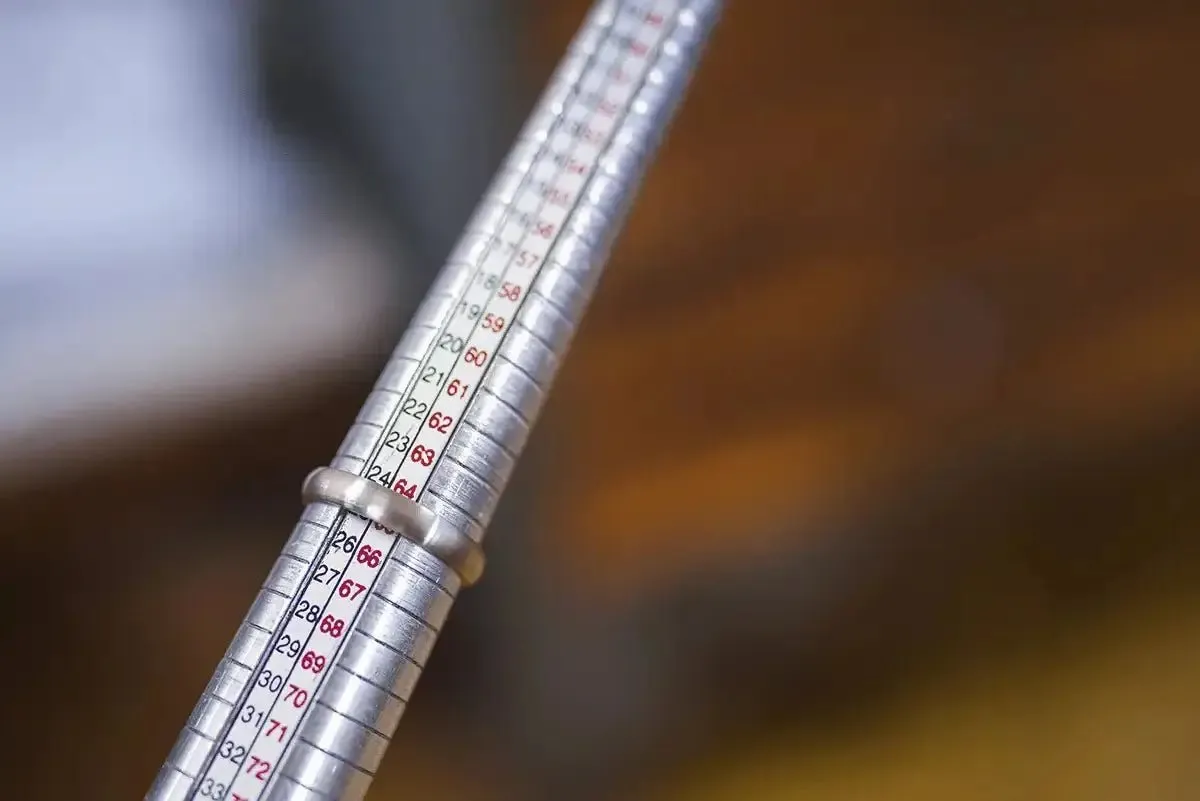
Why the correct ring size matters
A ring should pass over the knuckle without force and sit securely without pinching. The correct fit improves comfort and reduces the chance of loss, especially for a made-to-order ring worn every day.
Four reliable ways to measure ring size
1. Use the printable ring size chart
Download the chart and print it at 100% or “Actual size”. Do not select “Fit to page”. Check the printed scale with a ruler before following the instructions on the sheet.
Download the printable ring size chart (English PDF)
2. Measure an existing ring
Choose a ring that already fits the same finger on the same hand. Measure its inside diameter across the widest point, without including the metal, then compare that value with the table below.
3. Ask a jeweller to measure the finger
A professional ring sizer is the safest option when the measurement is uncertain, the knuckle is wider than the base of the finger, or the intended band is wide.
4. Use string or paper as a fallback
Wrap a narrow strip around the finger so it is snug but not tight. Mark where the ends meet, lay it flat, and measure the length in millimetres. This gives circumference, not diameter, so repeat the measurement before converting it.
Checks for a more accurate measurement
- Measure the exact finger and hand that will wear the ring; left and right hands can differ.
- Measure more than once at a normal hand temperature. Cold or swollen fingers can give a misleading result.
- Make sure the measured size can pass over the knuckle as well as fit the base of the finger.
- A wider band can feel tighter than a narrow band, so ask for advice before ordering if you are between sizes.
- Confirm whether your measurement is inside diameter or finger circumference before using a conversion table.
International ring size conversion table
Use the same row across the four columns. The EU/French value is finger circumference in millimetres; the last column is the inside diameter of a ring.
| US / Canada | UK / Australia | EU / France | Inside diameter |
|---|---|---|---|
| 4 | H 1/2 | 46.5 | 14.8 mm |
| 4.5 | I 1/2 | 48 | 15.2 mm |
| 5 | J 1/2 | 49.5 | 15.6 mm |
| 5.5 | K 1/2 | 51 | 16.0 mm |
| 6 | L 1/2 | 52 | 16.5 mm |
| 6.5 | M 1/2 | 53.5 | 16.9 mm |
| 7 | N 1/2 | 54.5 | 17.3 mm |
| 7.5 | O 1/2 | 56 | 17.7 mm |
| 8 | P 1/2 | 57 | 18.2 mm |
| 8.5 | Q 1/2 | 58.5 | 18.6 mm |
| 9 | R 1/2 | 59.5 | 19.0 mm |
| 9.5 | S 1/2 | 61 | 19.4 mm |
| 10 | T 1/2 | 62 | 19.8 mm |
| 10.5 | U 1/2 | 63.5 | 20.2 mm |
| 11 | V 1/2 | 64.5 | 20.6 mm |
| 11.5 | W 1/2 | 66 | 21.0 mm |
| 12 | X 1/2 | 67.5 | 21.4 mm |
Measuring for a surprise proposal
Borrow a ring your partner wears on the intended finger and measure its inside diameter, or ask someone close to help. If possible, take the ring to a jeweller. Guessing from a ring worn on another finger is much less reliable.
Before you order
Compare two measurements and check the size system selected on the product page. If the results disagree, the ring is wide, or you are between sizes, contact Chantal Vaulet before checkout so the made-to-order size can be confirmed.